Major territorial changes during my lifetime
The world you were born into doesn't exist anymore.

I was born just in time to live through the pivotal points in history.
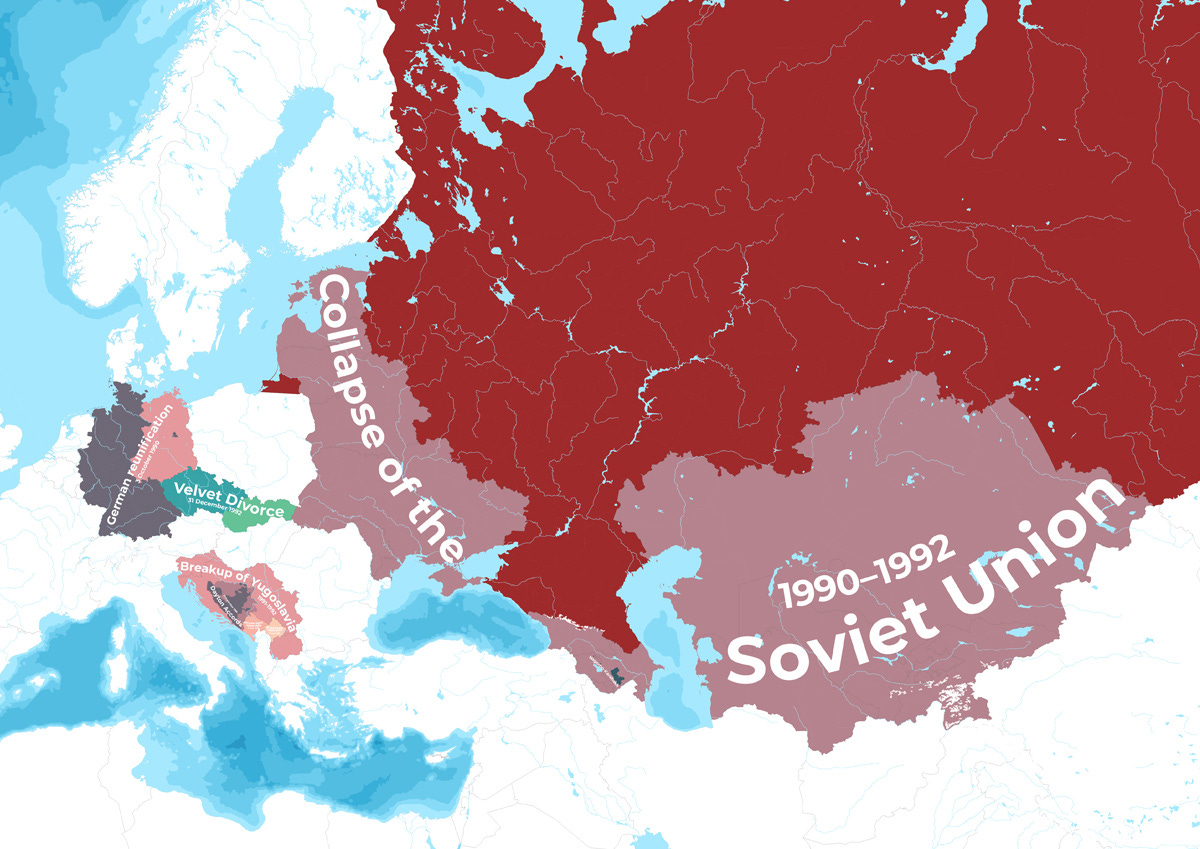
The collapse of The Soviet Union was one of the largest territorial change in history. Fifteen republics were held together by a single-party structure, central economic planning and political control from Moscow.
By 1992, the union dissolved into independent states: Estonia, Latvia, Lithuania, Belarus, Ukraine, Moldova, Georgia, Armenia, Azerbaijan, Kazakhstan, Uzbekistan, Turkmenistan, Kyrgyzstan, Tajikistan and its legal successor Russia.
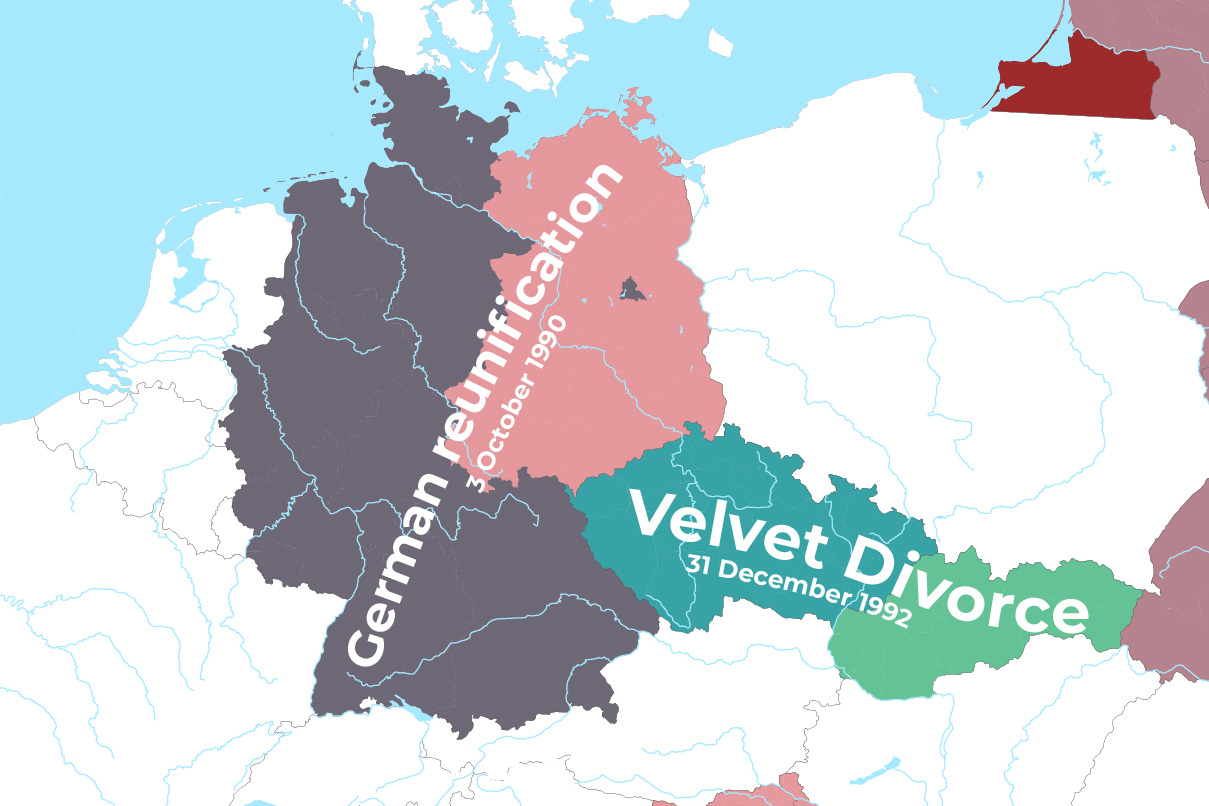
Germany
East Germany, officially the German Democratic Republic (GDR)
West Germany, officially the Federal Republic of Germany (FRG)
Germany pulled itself back together on 3 October 1990. The wound of the Cold War was closed, but the scar remains to this day. Whenever you look at any statistical maps about Germany, you can still clearly see the divide.
Czechoslovakia went the opposite way. No war, no blood. Just two nations walking apart on 31 December 1992. It’s often known as the Velvet Divorce. As in the bloodless Velvet Revolution of 1989 in Czechoslovakia.
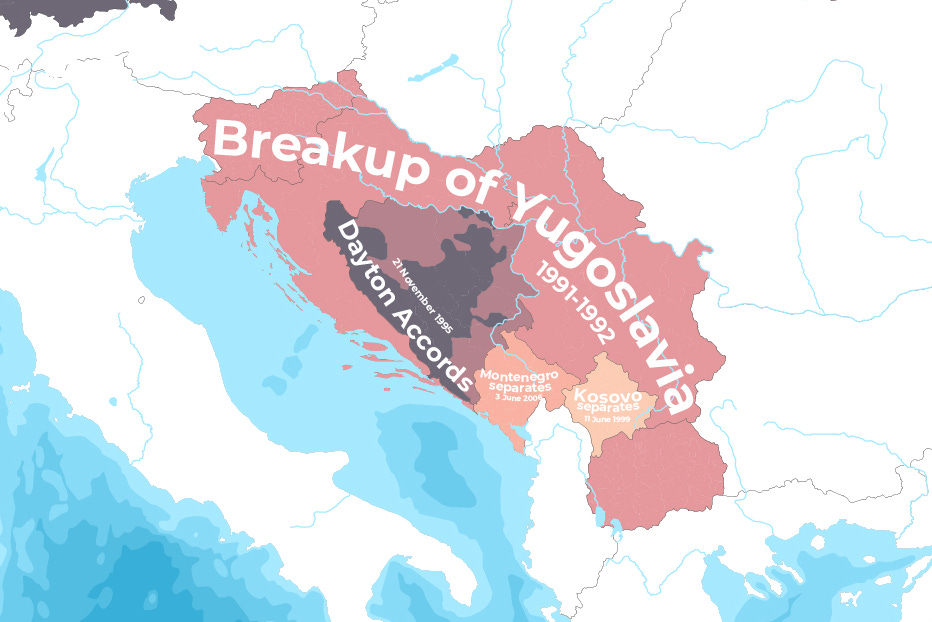
Some unions end quietly. Yugoslavia did not.
A decade of war, diplomacy, and shifting allegiances left seven countries where one once stood. Bosnia and Herzegovina, Croatia, North Macedonia, Montenegro, Serbia, Slovenia and Kosovo.
Slovenia
Slovenia declared independence in June 1991, followed by the Ten-Day War. Between the Slovenian forces on one side and the Yugoslav People’s Army on the other. Ending in the independence of Slovenia.
Croatia
Croatia also declared independence in June 1991, followed by the Croatian War of Independence lasting up until 1995.
Bosnia and Herzegovina
Bosnia and Herzegovina declared independence in March 1992, followed by the Bosnian war. Ending with the Dayton Agreement in 1995. The agreement was named after the Wright-Patterson Air Force Base near Dayton, Ohio where it was reached.
North Macedonia
North Macedonia declared independence in September 1991. For a change, a peaceful exit from Yugoslavia.
Montenegro
Montenegro remained in federation with Serbia until its independence referendum in 2006.
Kosovo
Kosovo is only partially recognized. It fought a war with Serbia in 1998 to 1999 with NATO intervention. In 2008 Kosovo declared independence.
Serbia
Serbia was a central actor in this breakup. It fought multiple wars and tried to preserve Yugoslavia under Serbian dominance. It held onto until 2006 when Montenegro declared independence. Ending Yugoslavia completely.
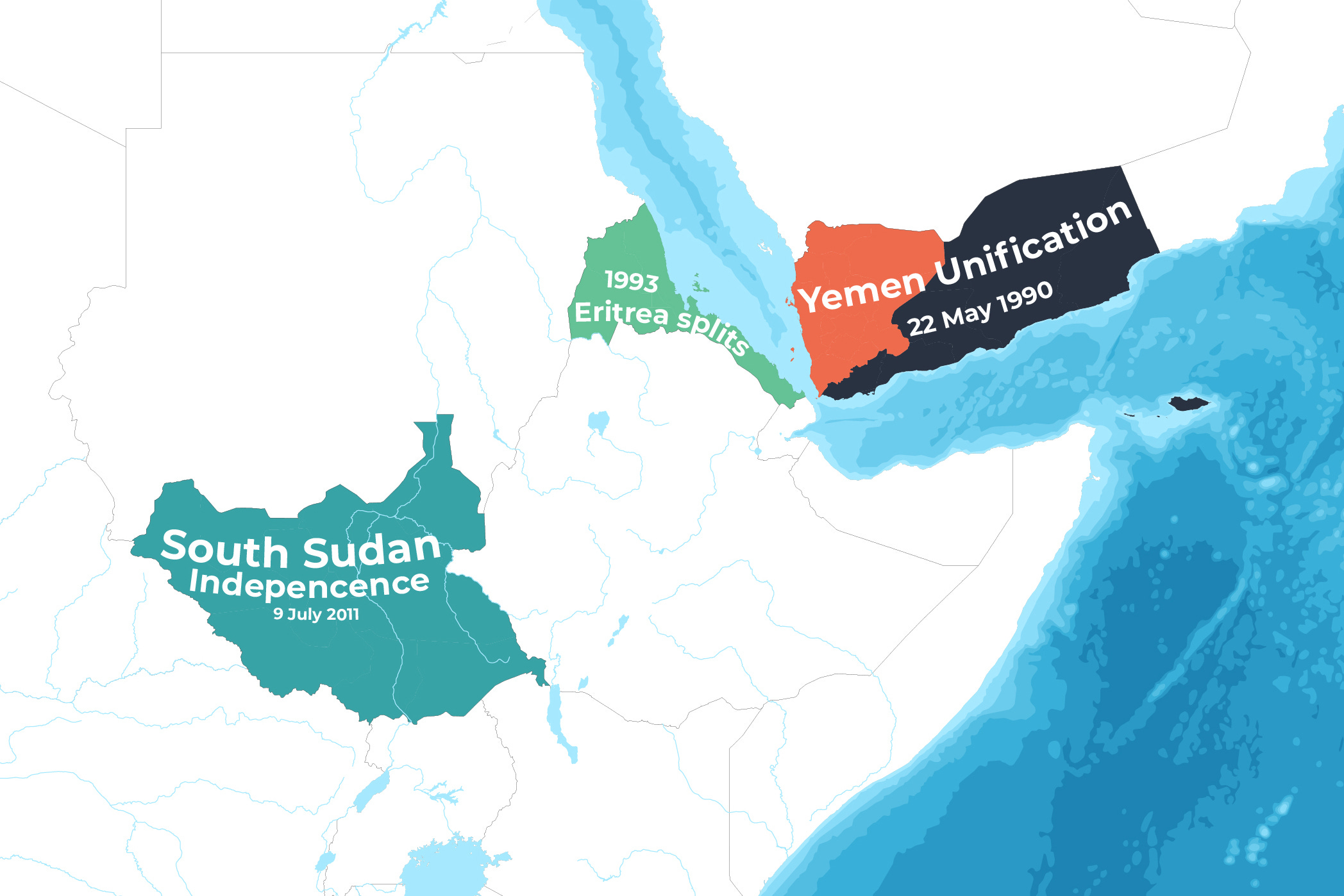
South Sudan
Sudan fought multiple wars for half a century between Muslim Arabs in the North and African and Christian in the South. They signed a peace treaty in 2005 and South Sudan gained independence in 2011.
Eritrea
Eritrea split from Ethiopia in 1993. They formed a federation in 1952, but Ethiopia annexed Eritrea in 1962. Which led to the Eritrean War of Independence until 1991. Two years later Eritrea gained independence. Eritrea was a territory with its own identity, history, administration and political consciousness.
Yemen
Yemen flips the pattern. They weren’t breaking apart, they joined. South Yemen used to be a socialist state aligned with the Soviet Bloc. This unification led the Yemeni Civil war in 1994 and its differences even to today.
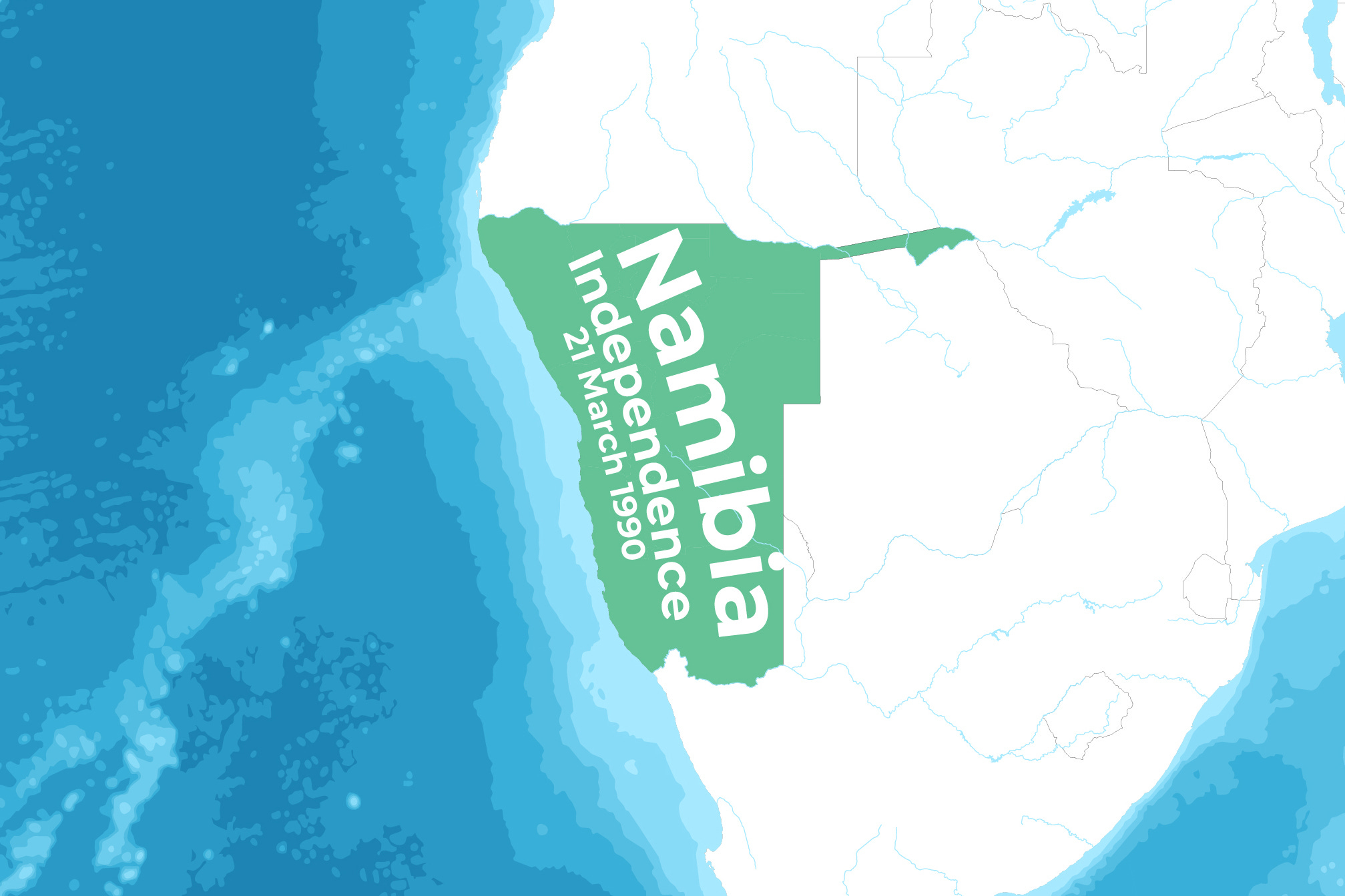
Namibia
Namibia used to be controlled by the German South West Africa in the 19th century. During WWI, South African forces occupied the territory and didn’t leave after the war. It fought a war of independence for decades (1966–1988), eventually culminating with independence in 1990.
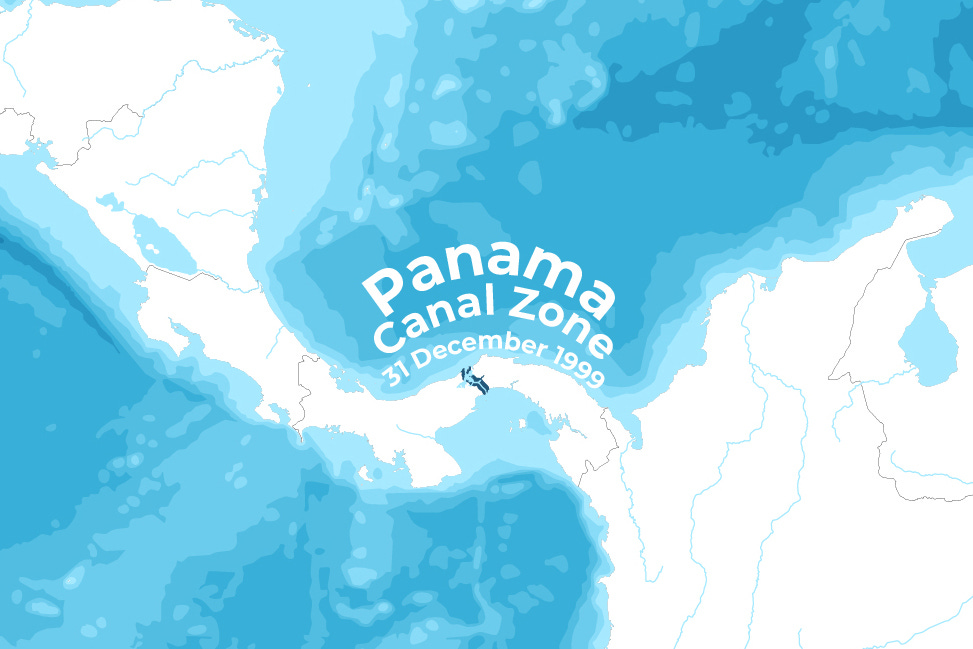
This small piece of land is one of the most important areas in the world. Before Panama, the canal used to be part of Colombia. In 1903 Panama declared independence with the support of the US. The canal itself was constructed 1904 to 1914 and remained essentially under US control. After decades of negotiations, not war, the canal control passed to Panama.
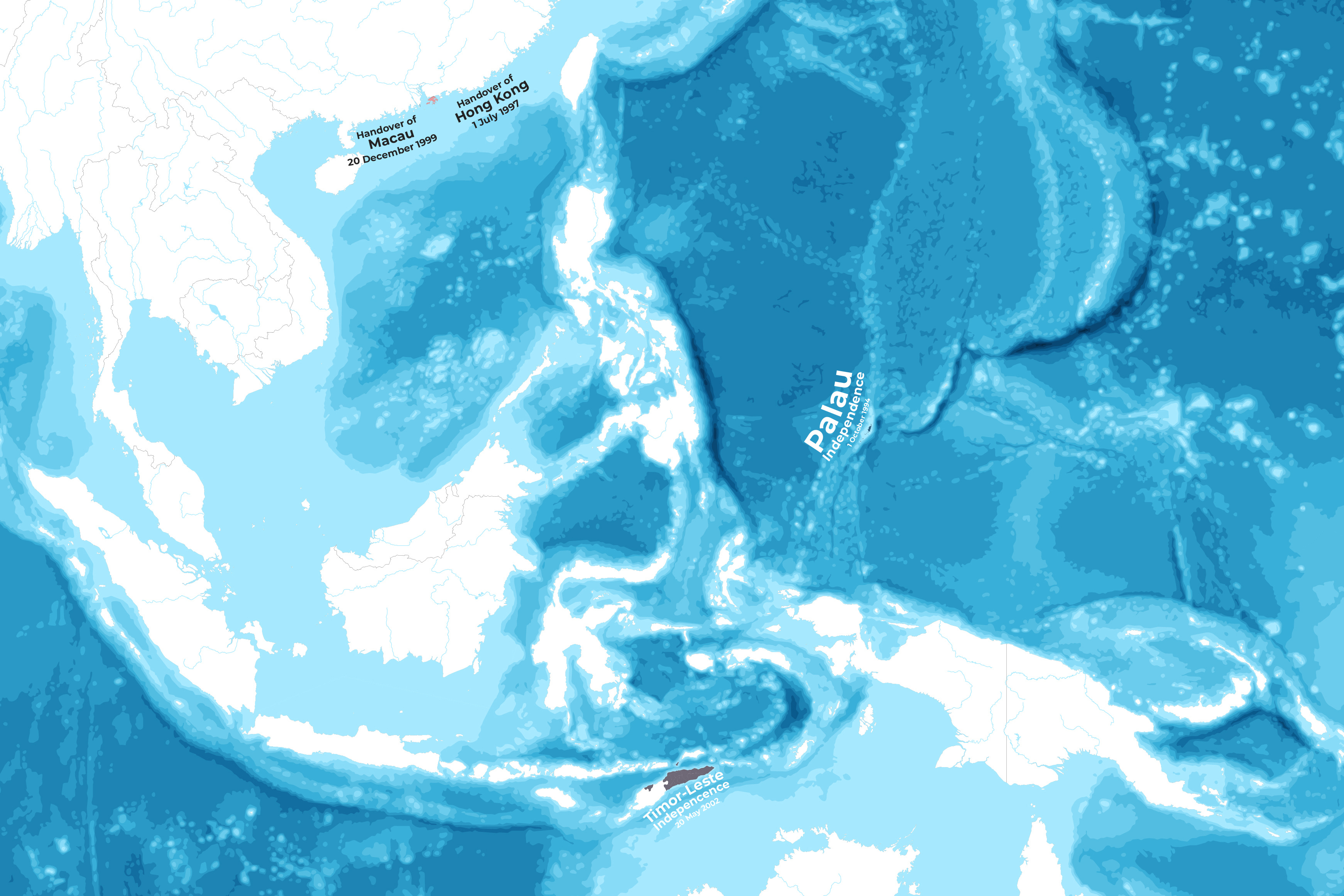
Palau
Palau moved through
Hong Kong
Hong Kong was ceded to United Kingdom in the 1800s with a lease of 99 years. After the lease ended, it was handed back to China in 1997.
Macau
Macau was under colonial control of Portugal since the 16th century. Until it was hander back to China in 1999.